

Natural Muscle Care Natural Muscle Care Men’s supplement index
Blank capsules and an unlabelled bottle on a card-stock sheet under a warm morning lamp
Ingredient guide

What goes into men's vitamin formulas

Ingredient lists are where supplement marketing either becomes useful or stops being useful. This guide covers the botanicals and micronutrients that show up most often in men's formulas sold in Indonesia, explained as label items with a realistic sense of what each one is doing in a capsule, tablet or softgel.

Mineral base

Zinc, and why it appears in so many men's formulas

Zinc is one of the most common minerals in this category, usually listed in milligrams per serving and often paired with B6. In mineral-support products it carries the formula's identity. You will see it in value-oriented blends and in more expensive imported multis alike. The difference between them is usually dose and the company it keeps.

What a label states is the amount per serving, and that number is stable across the whole pack — a 30-serving jar and a 60-serving jar of the same blend show the same zinc figure on the panel. What changes is the cost per serving once you divide the pack price by the serving count printed at the top of the facts table.

Browse product profiles
Minerals

Magnesium on the mineral-support shelf

Magnesium tends to appear in formulas that position themselves around recovery and everyday muscle comfort, though the copy usually stays careful. It is commonly combined with zinc and B6.

Compare formula styles
Water-soluble

B vitamins: the working backbone

B6, B12 and the rest of the B-complex appear in nearly every daily men's vitamin formula on the shelf, from sachet packs to performance blends. They are water-soluble, which is why daily formats make sense for them.

Build a daily routine
Dose over print

The number that matters

In Indonesia you will find magnesium in imported multis and in local mineral blends. The label amount per serving is the number that matters, not the size of the word on the box.

Herbal extracts

Tongkat ali and ginseng in herbal capsules

These two botanicals carry most of the vitality positioning in the category. Tongkat ali shows up in imported and local herbal capsules, often blended with other extracts. Ginseng appears in both capsule and tablet formulas and has the longest history of any botanical in this space.

Both are extracts, which means the label should tell you the extract ratio or the standardized amount. If it does not, that is a gap worth noting. A named ratio such as 1:200 or a stated percentage of a marker compound tells you roughly how much raw plant sits behind a single capsule — a bare "extract" with no figure does not.

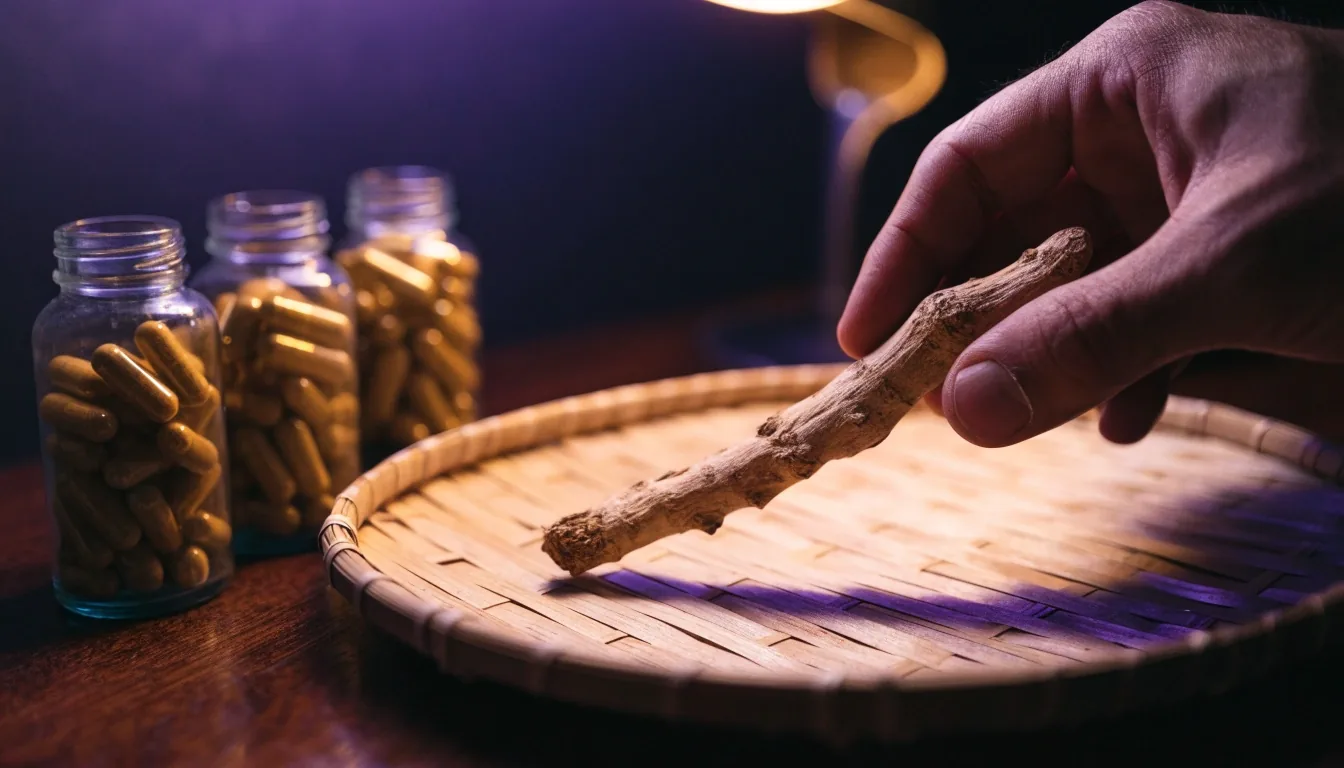
Unlabelled capsule bottles beside loose dried botanical root pieces under a warm shelf lamp
Extract-based capsules and loose botanical material, photographed without labels

Maca, saw palmetto and the age-conscious corner

Maca turns up in energy-oriented herbal blends, usually in capsule form. Saw palmetto clusters in the older-male part of the shelf, and it is the ingredient that most often signals a softgel format, as with Natural Factors Prostcare.

These two botanicals rarely anchor a formula alone. They are part of a blend, and the blend is what you are buying. A capsule that lists six extracts will carry a smaller amount of each than a single-ingredient capsule, and the panel very often reflects that. Reading the whole row tells you more than reading the first name.

Where these appear, they are frequently sold as natural capsules for strength and vitality routines rather than as standalone items, so it helps to check what the rest of the blend is doing before you commit to the format.

Browse product profiles
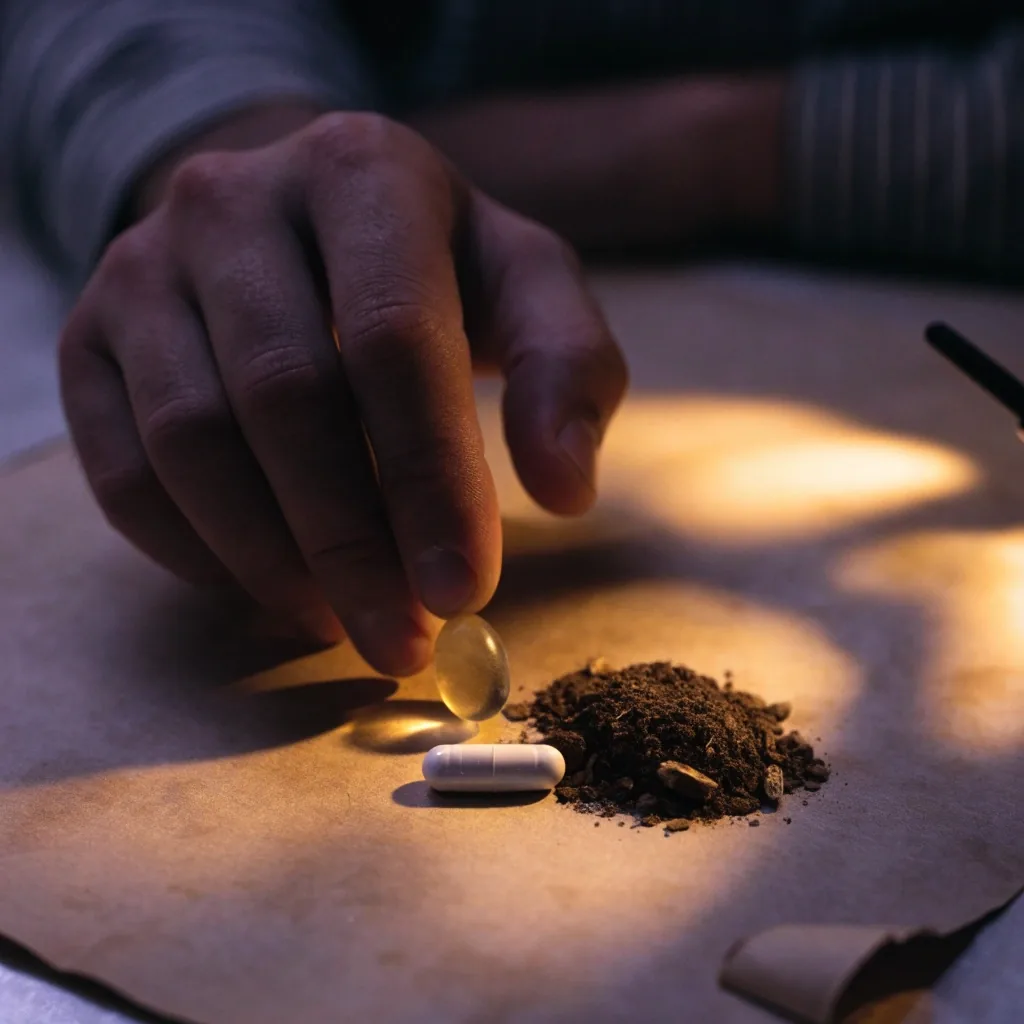
A hand nudging a softgel next to a capsule and loose dried root extract on matte card stock
Capsule and softgel formats sit in different corners of the shelf

Reading a supplement facts panel in ninety seconds

Four passes, in this order, gets you most of what the panel can tell you before you decide anything.

  1. Step one

    Find the serving size

    Everything below it is scaled to that one serving, not to the whole pack. Two capsules per serving is a different product from one.

  2. Step two

    Scan the amounts

    Compare each figure to the daily reference value where the label lists one. Where it does not, the milligram amount still travels between products.

  3. Step three

    Note the format

    A sachet, a softgel and a tablet will not deliver the same experience even with similar numbers, and the format usually changes how people actually take them.

  4. Step four

    Count the servings

    How many servings the pack contains tells you what a month of routine actually costs, which is the comparison most people forget to run.

Two label terms

What "bahan herbal" and "ekstrak botani" mean on Indonesian labels

Bahan herbal is the general term for botanical ingredients. Ekstrak botani means the ingredient is an extract rather than a whole dried plant, and extracts are the standard in capsule formulas.

Neither term tells you the concentration on its own. For that you need the extract ratio or the standardized marker, which clear labels print and vague ones skip.

Bahan herbal

A broad heading for plant-sourced ingredients on the package. It covers whole, dried and powdered material as well as extracts, so on its own it does not narrow down what is inside the capsule.

When a product leads with this wording and stops there, you are reading a category name rather than a specification.

Ekstrak botani

This one confirms the ingredient has been processed into an extract form, which is the norm for capsules and softgels. It is a more specific statement than bahan herbal, but it still stops short of telling you how concentrated it is.

Pair it with a printed extract ratio or a standardized figure and the row becomes genuinely useful. Without either, note it and move on to the next product.

See how we review labels

Pairings you will see again and again

Four clusters cover most of what sits on the shelf. Recognizing them lets you place almost any product within a few seconds of picking up the box.

Zinc with B6

Mineral corner

Capsule, tablet

The most common pairing in the mineral corner, and usually the first two lines of the panel.

B-complex with magnesium

Daily multi

Tablet, sachet

Where this pair leads, the product is usually positioned as an everyday formula rather than a single-purpose one.

Tongkat ali with ginseng and maca

Herbal energy

Capsule

The trio that shows up in herbal energy capsules, usually listed as separate extracts on the same row set.

Saw palmetto with other botanical extracts

Older-male blends

Softgel

Sits with other extracts in softgels, where the oil-based format suits the blend.

A proprietary blend with a single total milligram figure and no breakdown is not a reason to walk away — it is a reason to go looking for the manufacturer's own panel, where the numbers usually do appear.

On reading a panel that hides its parts

Non-ingredient things worth checking

Four items on the outer box rarely get read and are usually the fastest way to sort a shelf. Registration status, manufacturer name, expiration date, and where the product is sold.

A formula listed as terdaftar BPOM and carried by a recognized pharmacy chain has cleared two filters that an anonymous listing has not. Neither of those tells you how you personally will respond, but together they tell you whether the product is what it says it is.

The expiry date is the one that quietly decides your next purchase. A 60-serving jar expiring in four months is a different proposition from the same jar with a year left, and the expiry is always printed on the pack.

See how we review labels

Registration status

Wording such as terdaftar BPOM on the pack signals the product has been registered with the Indonesian authority. It is a real-world filter when you are standing in an aisle.

Manufacturer name

A named manufacturer with a published product page can be looked up. A name that appears nowhere else is a note worth keeping.

Expiration date

Check that the remaining shelf life covers the servings in the pack. A short date on a large jar usually means you will not finish it.

Where it is sold

Pharmacies and established retailers carry stock they can be asked about. That is a normal reason to prefer one listing over another, not a verdict on the formula.

When an ingredient list raises a question

Sometimes a label lists a proprietary blend with a total milligram amount and no breakdown. Sometimes a botanical appears without any extract detail. These are not automatic reasons to put the box back, but they are reasons to look for a second source of information, ideally the manufacturer's own product page or the leaflet inside the pack.

If nothing clarifies it after that, choose something clearer. There is enough variety in men's vitamin formulas sold in Indonesia that you rarely need to accept a panel you cannot read.

If you are already stacking a multivitamin with a separate herbal capsule, read both panels for overlap before combining anything. A pharmacist is the right person to ask about that, and it takes one short conversation.

Hands holding a blank blister strip and an unlabelled bottle above a card-stock tray in morning light
Two panels, one decision — read both before stacking

Questions that come up about these rows

Two things visitors ask us most often when they are comparing a mineral blend against an herbal capsule.

Which ingredients are commonly paired with B vitamins and zinc?

Magnesium is the most frequent third ingredient in mineral blends. In herbal formulas, tongkat ali, ginseng and maca are the usual companions, though they sit in a separate style of product with its own panel layout and its own format conventions.

Do I need both a multivitamin and a separate herbal capsule?

That is a stacking question, and it depends on what each product already contains. Read both labels for overlap before combining anything. If you are unsure, a pharmacist is the right person to ask — it is a normal counter question and takes a couple of minutes.

Why does the same botanical appear under different names on two packs?

Indonesian packs often carry the local term, such as bahan herbal, beside the English or Latin name of the same plant. Matching the two rows is usually the fastest way to compare a local product against an imported one with similar contents.

Take the panel you just read to the next page

Once you know which clusters a formula belongs to, the comparison pages do most of the rest. Bring the ingredient amounts with you and the difference between two products becomes a two-minute decision.

Natural Muscle Care is an editorial resource, not a pharmacy or a medical service. Nothing on this page is a diagnosis or a substitute for advice from a qualified professional. Questions about your own situation belong with a pharmacist or your doctor. Write to us at [email protected] or call +62 21 328 0344, Monday to Friday, 9:00 AM – 6:00 PM.